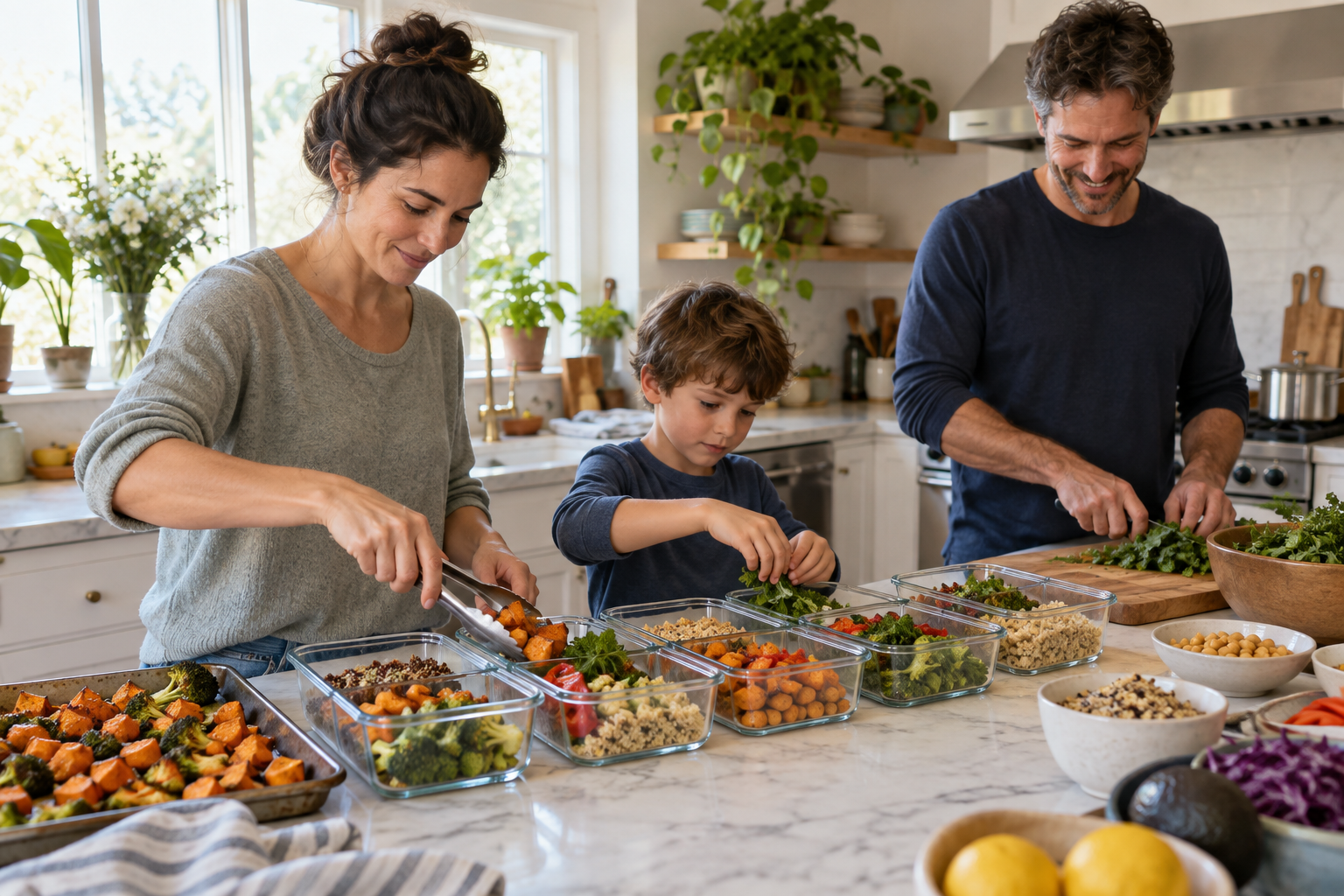
This memo is for a Sunday meal-prep routine covering lunches, leftovers, and a few freezer portions. The goal is not to find a universal winner. It is to identify containers that move reliably between storage, transport, reheating, and cleanup and make the tradeoffs visible before anything reaches your cart.
Meal prep usually fails at the handoff points: the container that does not fit the fridge shelf, the lid that disappears in the drawer, or the portion that cannot move from freezer to lunch bag without a second dish. A useful set is a small, repeatable system. It should make tomorrow's meal visible, make leftovers easy to stack, and make washing up predictable rather than turning Sunday into a container inventory project.
Design the set around a weekly menu
Before browsing, write down the meals that actually travel through your kitchen. Note how many portions are refrigerated, how many are frozen, and which foods need a shallow shape or a leak-resistant lid. A household making two lunches and one family dinner needs a different set from a person portioning soups, sauces, and snacks. The goal is to buy a few repeatable sizes that correspond to real meals.
Measure the refrigerator shelf, freezer drawer, and lunch bag. A container that is slightly too tall can waste a full shelf, while one that is too wide may not fit beside a milk carton. Measure the cabinet opening too; nesting only helps when the stack can be lifted out without removing half the shelf.
Choose materials for the temperature changes
Glass can make contents easy to see and may move well from refrigerator to oven when the specific product is rated for that use. It is also heavier and less forgiving when carried in a crowded bag. Plastic can be lighter for lunches and freezer storage, but confirm microwave, dishwasher, and temperature limitations for the actual line rather than assuming all containers share the same rating.
Lids are the part most likely to break the system. Compare the seal design, vent or tab if present, and whether replacements are sold individually. A lid that snaps on securely but has deep grooves can require more washing attention. Avoid mixing many unrelated shapes unless the household has a clear place to store each one.
Make the refrigerator do the memory work
Clear walls, a simple label, or a consistent placement system helps answer the question what should be eaten next. Use one shelf or bin for ready meals and keep the oldest portion toward the front. This is a layout decision, not a container feature, but a consistent shape makes it easier to keep the layout stable.
For sauces, grains, and foods that spread, prioritize a lid that seals without forcing the container to be overfilled. Leave headroom where freezing expands the contents and cool cooked food according to your food-safety practice before closing and storing it. The container should support the routine, not encourage rushed storage.
Count the cleanup cost before buying a set
Look at the underside of lids, the corners around seals, and the space between nested pieces. Those details determine whether washing is a quick rinse or a separate evening task. If the household hand-washes often, choose shapes that can be reached by the sponge and dried upright. If the dishwasher does most of the work, confirm that the maker's rack and temperature guidance fit your machine.
Do not let a large piece count substitute for a useful inventory. A smaller set with three repeatable bases and compatible lids is easier to replace and easier to audit. Keep a simple rule for retiring warped or stained pieces so the drawer does not slowly refill with containers no one wants to use.
Three checks that deserve priority
- 01
repeatable sizes with interchangeable lids.
- 02
clear walls or labels for quick fridge decisions.
- 03
materials rated for the temperatures you actually use.
Compare the system, not the piece count
- For lunches, compare leak resistance, weight, and bag fit before maximum volume.
- For freezer meals, compare stackability, headroom, and the maker's temperature guidance before matching colors.
- For a crowded cabinet, compare nesting and replacement lids before adding more specialized shapes.
A NOTE BEFORE YOU BUY
Make the shortlist fit your room.
There is no active retailer link on this memo yet. Use the checklist above, then confirm counter depth, sink clearance, care instructions, and replacement parts on the current maker or authorized retailer page before ordering.
Read related Kitchen memosThe tradeoff to keep in view
huge mixed sets filled with tiny novelty sizes and lids that cannot be replaced. More capacity, more settings, or a more polished finish can add cost and maintenance without improving the everyday task. A simpler choice that is easy to clean, store, and replace often provides better long-term value.
A large matching set is not automatically helpful if the household cooks different portions every day or has little cabinet space. Single-purpose containers can make sense for a very specific lunch or freezer routine, but they should have a named job before they enter the drawer.
Questions to ask before checkout
- Is glass better than plastic for meal prep?
- Neither is universally better. Glass may be useful for visibility and certain reheating workflows, while plastic can be lighter for carrying. Check the product's current temperature and care guidance.
- How many containers should I buy?
- Count the portions that need to be stored at the same time, add only a small buffer, and choose repeatable sizes. More pieces are useful only when they match a recurring meal pattern.
- Should lids be interchangeable?
- Interchangeable lids can simplify storage, but only when the shapes truly seal across the set. Confirm compatibility from the maker instead of assuming similar sizes fit.
The DeviceMemo takeaway
Buy fewer shapes in repeatable sizes; cabinet order is often more valuable than an impressive piece count. Write down the reason for the purchase in one sentence. If a candidate does not solve that sentence clearly, remove it from the shortlist. That small pause is often enough to separate a useful household tool from another object that needs storage.
Method note: This guide provides scenario-based editorial guidance and does not claim hands-on testing of a specific product. Recommendations should be checked against current manufacturer information and your household's needs.