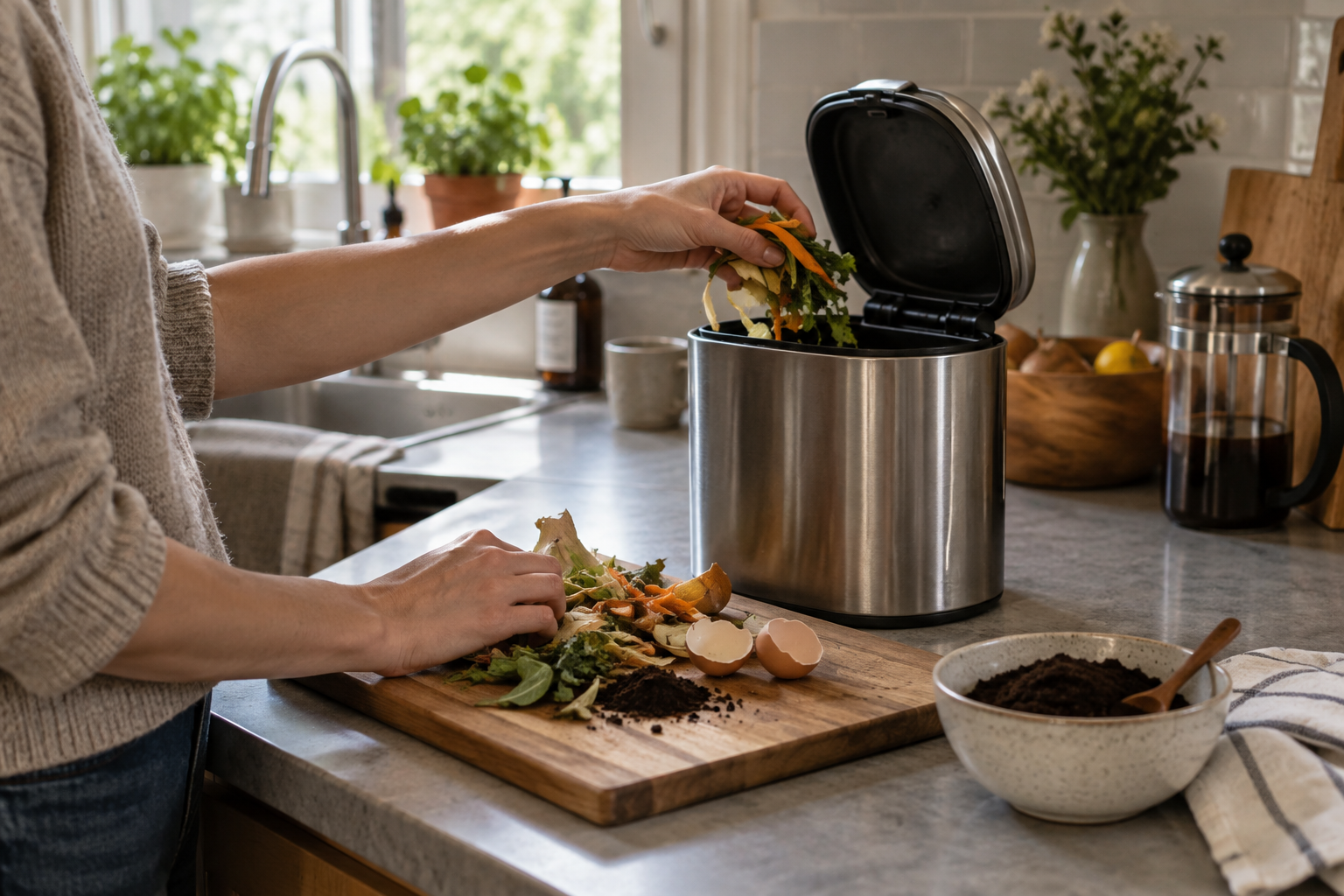
This memo is for a weeknight cook moving between vegetables, bread, and quick lunches in a compact kitchen. The goal is not to find a universal winner. It is to identify a stable work surface that is easy to wash and comfortable to lift and make the tradeoffs visible before anything reaches your cart.
A cutting board is one of the few kitchen tools used before almost every meal, yet it is often chosen by appearance alone. In a compact kitchen, the board has to earn its footprint: it needs to stay still while a knife is moving, leave enough room for a realistic prep pile, and still fit into the sink when the work is done. Those three moments are more useful decision points than a material trend or a long list of claimed features.
Measure the whole prep-and-cleanup route
Start by measuring the usable counter area, not the widest empty stretch. Leave room to set down a bowl or a hot pan, and note whether the board will sit near the sink, cooktop, or refrigerator. Then measure the sink basin and the route to it. A board that is pleasant to chop on but has to be washed at an angle in the bathtub is likely to be left dirty or wiped instead of properly cleaned.
Think about the food you actually prepare in a normal week. A person who mostly slices fruit and bread may prefer a lighter board that can be lifted with one hand. Someone who breaks down squash or prepares several vegetables at once benefits from more working area and a heavier base. The right size is the largest one that can be moved, washed, and stored without a special ceremony.
Wood, plastic, and the details that change the routine
Wood can feel forgiving under a knife and look good enough to stay on the counter, but it usually needs a deliberate drying and oiling routine. Check the maker's care instructions rather than assuming every wood species behaves the same way. A board that stays damp against a wall or in a closed cabinet can develop odors or surface changes, so storage is part of the material decision.
Plastic is often easier to move through a dishwasher or sanitize after raw meat, but a thin flexible sheet can curl or skate on a smooth counter. Look for a surface that can be replaced or retired when deep grooves appear. A rubber edge, grippy feet, or enough mass can be more useful than a decorative border. Whatever the material, keep a separate board or clearly separated workflow for foods your household treats as higher risk.
Solve slipping before you solve aesthetics
A board that shifts a few millimeters with every cut makes a simple task feel tense. Before buying an oversized model, test the stability of the space with a damp, flat towel under the board. If that makes the setup work, a lighter board may be perfectly reasonable. If the towel interferes with cleanup or the board still moves, prioritize integrated feet, a non-slip rim, or greater weight.
Consider whether the board will be used by more than one person. A board that requires two hands to relocate may be frustrating for a shorter cook or anyone working around a hot stove. Handles and juice grooves can be useful, but they also reduce the uninterrupted surface and add corners to clean. Choose those details only when they match a recurring task, not because they make a product photo look more complete.
A maintenance plan is part of the purchase
Before checkout, write down where the board will dry, how it will be cleaned, and what will happen when the surface is deeply scored. Confirm whether the maker allows a dishwasher, which oils are recommended, and whether replacement feet or boards are available. These details are usually more reliable in current manufacturer instructions than in a retailer's short bullet list.
Skip a board that asks your household to change every meal around it. The best everyday option is usually the one that can be cleared, washed, dried, and returned to its place before the next person needs the counter.
Three checks that deserve priority
- 01
a non-slip base or enough mass to stay planted.
- 02
a size that fits both the counter and sink.
- 03
a surface compatible with the knives you use most.
Compare the candidates by the task they remove
- If the main problem is movement, compare base grip and total weight before surface finish.
- If the main problem is cleanup, compare sink fit, drying space, and care instructions before extra length.
- If the main problem is crowded prep, compare usable uninterrupted area and storage position before adding a second specialty board.
A NOTE BEFORE YOU BUY
Make the shortlist fit your room.
There is no active retailer link on this memo yet. Use the checklist above, then confirm counter depth, sink clearance, care instructions, and replacement parts on the current maker or authorized retailer page before ordering.
Read related Kitchen memosThe tradeoff to keep in view
oversized boards that never fit in the sink and decorative boards that are awkward to sanitize. More capacity, more settings, or a more polished finish can add cost and maintenance without improving the everyday task. A simpler choice that is easy to clean, store, and replace often provides better long-term value.
A very small board may be fine for a kitchenette or a bread-and-fruit routine, but it is a poor fit if ingredients regularly fall off the edges. Conversely, a thick butcher-block style board can be unnecessary when it will live in a drawer and be carried to the sink several times a day.
Questions to ask before checkout
- Is a heavier board always safer?
- Not automatically. Weight can reduce movement, but a board that is too heavy to wash comfortably may be used less carefully. Stability, grip, and a manageable cleanup route matter together.
- Do I need a juice groove?
- Only if you regularly cut juicy foods and have a cleanup plan for the channel. The groove reduces flat work area and adds a detail that needs to be scrubbed.
- When should a board be replaced?
- Replace it when cracks, deep grooves, warping, or persistent odors make cleaning unreliable. Follow the material-specific guidance from the maker when available.
The DeviceMemo takeaway
Choose the largest board you can wash comfortably, then solve slipping with weight, feet, or a damp towel. Write down the reason for the purchase in one sentence. If a candidate does not solve that sentence clearly, remove it from the shortlist. That small pause is often enough to separate a useful household tool from another object that needs storage.
Method note: This guide provides scenario-based editorial guidance and does not claim hands-on testing of a specific product. Recommendations should be checked against current manufacturer information and your household's needs.